
ChatGPT Sites can be shared with named viewers without making them public
Site owners can invite people to view a Site, with workspace controls governing external access.
Reporting and original sources on medicine, AI, computing, manufacturing, energy, and science. Read the story, then explore the evidence.
Site owners can invite people to view a Site, with workspace controls governing external access.

Google released Gemini 3.8 Flash as generally available on September 2 and Gemini 3.8 Flash Cyber as a Fairwind-gated twin with DeepMind's CodeMender harness. This is the third Flash drop in six weeks, three weeks after 3.7 Flash. The public model keeps the same introductory price as 3.7 through December 31: $0.75 per million input tokens and $3.75 per million output. Google says Flash Cyber scored about 86.2 percent pass@1 on CyberGym and 3.8 Flash scored 71 percent on Deep SWE 1.1; those are G

DHH says Omarchy is moving to a streamlined installer for Apple M machines, with a full announcement later today. Higgsfield says a phone can act as a virtual camera for AI video from a Blender scene. World Labs posted Atlas outputting explicit 3D from images, and Justine Moore showed a reshoot from a new angle. Install conversion and reconstruction claims are the labs' and posters' claims.

Anthropic released Claude Fable 5.1 (generally available) and Claude Mythos 5.1 (invite-only trusted access for vetted cybersecurity and life-sciences work). Anthropic says they are the same model with different safeguards. Matthew Berman's capability rankings are his recap, not independently verified.
OpenAI says Astra is the first model it has designated at the Critical cybersecurity capability threshold under its Preparedness Framework. The company says Astra can find unknown flaws and build exploits across hardened systems without step-by-step human guidance, and that stronger safeguards plus limited alpha access come with the release. Capability numbers and safeguard scores are OpenAI's own claims. Separately, Lauren shipped Dr Eggbot v0.2 with routine health checks for Grok Bots.

Thomson Reuters launched Thomson, an LLM that starts from Qwen3.5-397B and is trained on 175 years of the company's proprietary legal, tax, accounting, and news data. Zach Moskow said the company spent $40 million on it. Thomson Reuters' published benchmarks put the model near Claude Opus 4.8; those scores are the company's claim, not an independent test. Also in this pack: Kalpa TTS Beta v0.1 is listed No. 2 on Design Arena's Audio Realism Bench at Elo 1331, ahead of MAI-Voice-2 and Eleven v3 C

Lenny Rachitsky posted takeaways from Tara Seshan, OpenAI's ChatGPT Work product lead. Tara's heuristic is to build for where the models will be in two to three months, not for today's models or a year out. She also frames the future of work as steering, not rowing, and says OpenAI's culture asks whether teams are mainlining their own product. These are her comments as relayed by Rachitsky, not an OpenAI product announcement.

OpenRouter said a GPT 5.6 discount was followed by a 13.8x jump in token use. Joshua Gans wrote that the Hugging Face incident is worse than first reported. Sony and Warner sued Anthropic over musical compositions. Alex Lieberman posted a 16-minute Grok Bot walkthrough. None of that is a new model launch.

Recent research and factory programs focus on the barriers between solid-state battery cells and mass production: dendrites, grain boundaries, sintering, cutting, and inline quality control. None of that yet proves low-cost automotive manufacturing.

The Department of Energy's Genesis Mission is linking national-lab instruments, scientific datasets, supercomputers, quantum systems, and commercial AI tools into a shared discovery platform. The first project portfolio was selected in July 2026.

Field tests show software can trim AI-cluster power use during grid stress while protecting priority jobs. One demonstration reported a 25 percent reduction during a three-hour Phoenix event. Commercial-scale projects will test whether that holds as a grid resource.
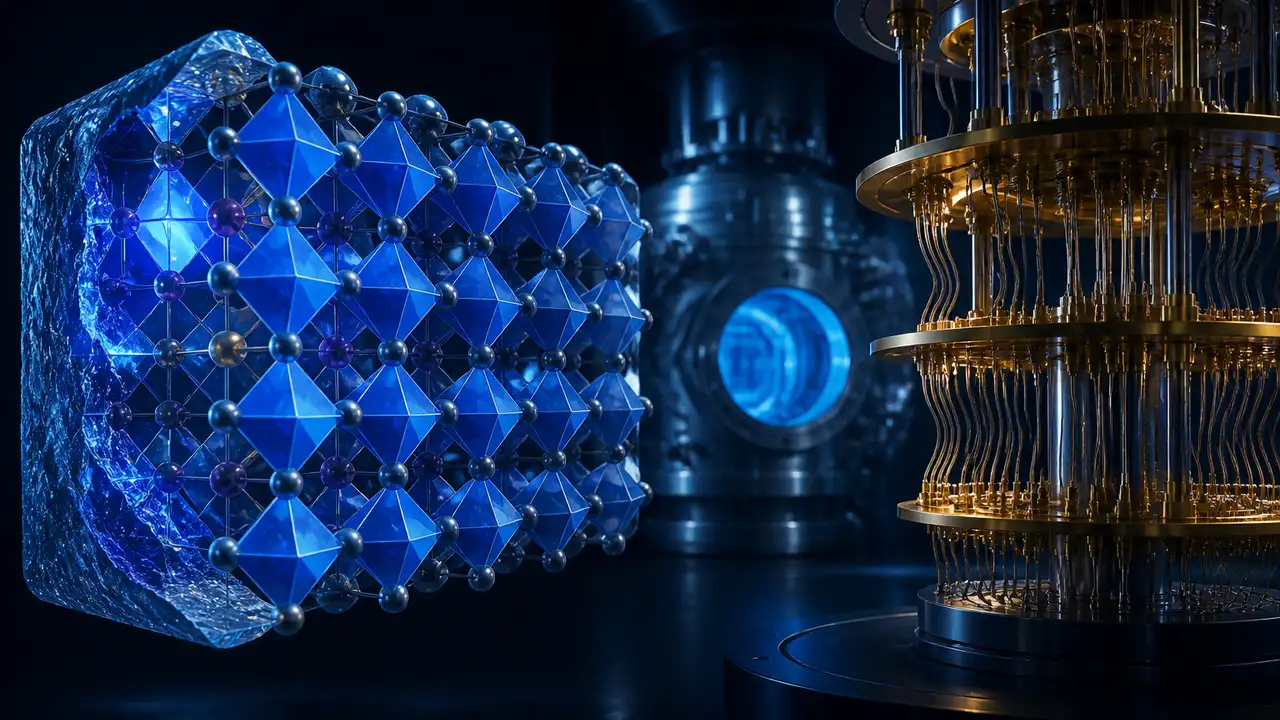
IBM, Oak Ridge National Laboratory, and Cleveland Clinic used a hybrid quantum, classical, and AI workflow to model molten salts that could breed fuel inside a fusion reactor. It is a first computation in that pipeline, not proof of advantage over classical methods.
Google DeepMind's Gemini Robotics 2 models connect language, vision, planning, and motor control across humanoids and other robot bodies. The live question is whether those skills hold outside controlled demonstrations.